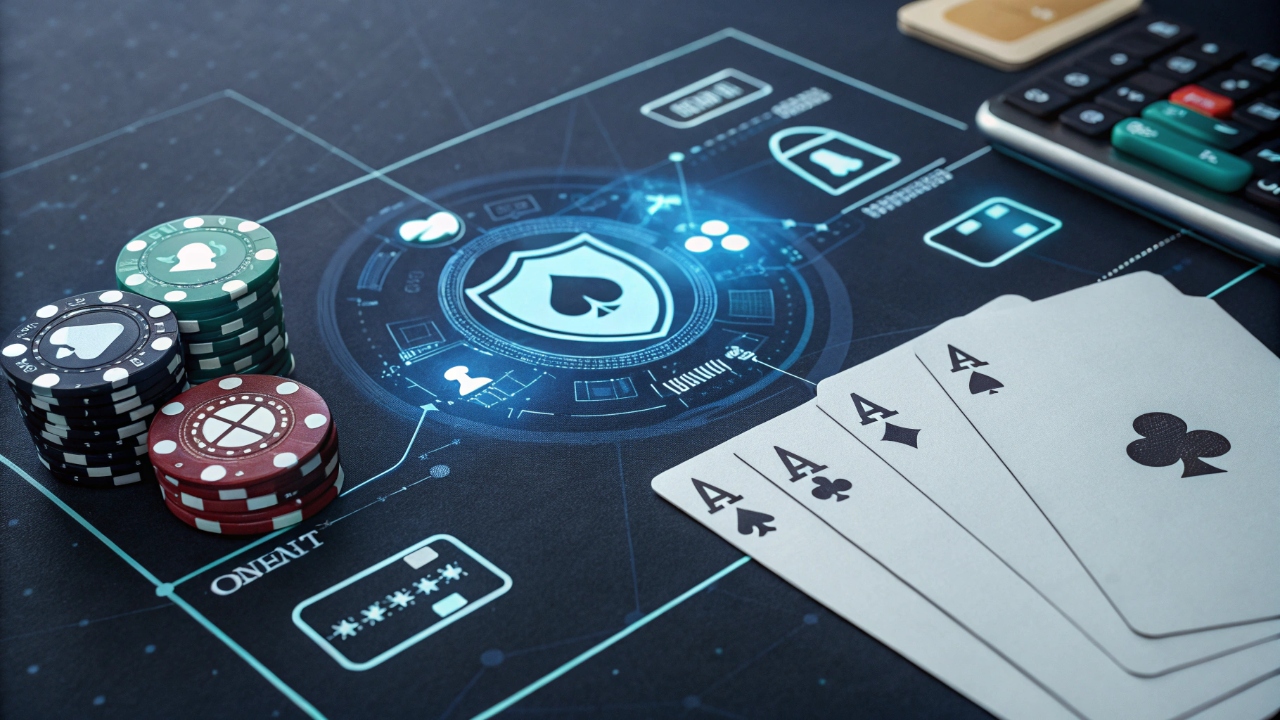
The iGaming industry has long moved beyond the image of a “gray zone” where luck and opaque rules decide everything. Today, major online casinos operate in a digital environment where user trust directly depends on the quality of account protection, payment security, and personal data safeguards. For players, security has become just as important as slot selection, poker availability, or bonus size. That is why modern platforms invest not only in content and marketing, but also in complex cybersecurity infrastructure that works in the background every second.
Why Cybersecurity Has Become a Core Industry Standard
Online casinos process large volumes of sensitive information: identification documents for verification, transaction history, gaming sessions, behavioral signals, and device parameters. Any vulnerability in such a system can lead not only to financial losses but also to a reputational crisis. For this reason, leading operators build protection using a multi-layered architecture, where each part of the ecosystem is monitored separately.
The key idea behind this model is that security is not limited to a single antivirus tool or a strong password. A platform simultaneously protects data transmission channels, server environments, payment gateways, and user accounts. If one barrier comes under pressure, the others continue to hold the system. This approach reduces the risk of large-scale incidents and helps isolate suspicious activity faster without shutting down the service.
How Data and Payments Are Protected in Real Time
At the core of any secure platform is encrypted traffic between a player’s browser and the server. When users log in, deposit funds, or request withdrawals, data is transmitted through encrypted channels, making interception significantly more difficult. Additional session protection mechanisms help prevent token substitution and unauthorized access to personal accounts.
A separate focus is payment security. Licensed operators integrate trusted processing solutions where each transaction is automatically checked for fraud indicators. The system analyzes transaction speed, login geography, matches with known attack patterns, and unusual account behavior. If the risk level is high, the transaction may be paused for additional review. For a legitimate player, this appears as a brief delay, but these scenarios often stop fund theft before money is actually withdrawn.
Infrastructure-level attack protection also plays a major role. Online casinos use network filtering and traffic balancing to withstand peak loads and repel attempts to overload the service. As a result, the platform remains available, while critical functions related to payments and authorization continue operating reliably even under stress conditions.
Verification, Anti-Fraud, and Game Fairness Control
Security in online casinos is not only about protection from external hackers but also about controlling internal risks. Identity verification is central here. KYC procedures help confirm that an account belongs to a real person rather than a bot or a fake profile. This control is especially important during withdrawals, where attempts to bypass rules are most common.
At the same time, anti-fraud analytics are constantly active. Algorithms evaluate dozens of signals: betting frequency, repeated behavior patterns, sudden shifts in financial activity, and abnormal login trends. This makes it possible to detect multi-accounting, bonus abuse, and hacking attempts at an early stage. In reliable operations, decisions are not made by automation alone: complex cases are reviewed by risk specialists to reduce false account blocks.
Another major trust factor is fairness in gameplay. In licensed projects, random number generators and game modules undergo independent audits. These checks confirm that outcomes are generated correctly and are not adjusted for specific users. For players, this means one simple thing: the result of each round is determined by game mathematics, not hidden platform interference.
What Players Can Do to Maximize Their Own Protection
Even the strongest security system works better when users follow good digital hygiene. A strong unique password, two-factor authentication, and control over login devices significantly reduce the risk of account compromise. It is equally important to verify website addresses and use only official apps, because phishing copies often look convincing but are designed to steal data.
In practice, safe gaming depends on two components: the technological maturity of the operator and the attentiveness of the user. If a platform has transparent policies, a modern monitoring system, and clear verification procedures, players get not only convenience but also a predictable environment for financial operations. Under these conditions, an online casino stops being a zone of uncertainty and becomes a controlled digital service where security is not a marketing slogan but daily engineering work.